- Stress and anxiety
- Trauma and addiction
- CBT and DBT skills
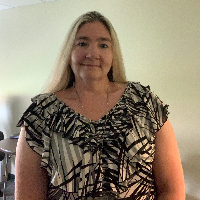
About Julie
Her approach is practical and direct. Sessions focus on identifying immediate problems, learning skills to manage mood and behavior, and setting clear, achievable goals. Julie draws on client-centered listening alongside structured techniques to break down concerns into steps people can act on between appointments.
Julie uses Cognitive Behavioral Therapy to look at patterns of thinking and behavior that keep problems going. She also draws on Dialectical Behavior Therapy skills for emotion regulation and distress tolerance when feelings become overwhelming. Motivational Interviewing helps when change feels uncertain and a client wants to build readiness to act.
Her background includes a range of roles in mental health settings in New York, including work in hospitals, outpatient care, school social work, addiction services, and corrections. That varied experience informs how she assesses risk and plans practical next steps with each person.
People can expect straightforward work on problems that affect daily life. Julie emphasizes clear goals, milestone checks, and skills practice between visits. She works in English and does not take international clients.
Areas of expertise
Primary focus
Also works with
Additional focus areas
Therapeutic approaches
Experience
3+ years
Credentials
New York
Languages
English
Therapeutic approaches and online sessions
Julie regularly uses Cognitive Behavioral Therapy and Dialectical Behavior Therapy skills in her work. Cognitive Behavioral Therapy looks at the links between thoughts, feelings, and actions and teaches practical steps to change unhelpful patterns. DBT skills focus on emotion regulation, distress tolerance, and interpersonal effectiveness, which can help with strong emotions and relationship strains.She also uses Motivational Interviewing to help people clarify goals and strengthen their motivation for change. Finding the right mix of approaches is a collaborative process. The therapist will discuss options and adjust techniques to fit a person’s goals and preferences rather than prescribing a single method.
If you are considering online sessions, confirm the current session formats before booking since formats were not specified in the profile. Online work can make it easier to fit sessions into a busy week, reduce travel time, and allow shorter check-ins when needed. It can also let someone join from quieter surroundings, use less bandwidth with an audio call, or choose a camera-off option if that feels better. Ask about specific session types and scheduling when you complete the matching questionnaire prior to your first appointment.
Frequently asked questions
What concerns does she help with?
She works with stress, anxiety, addiction, trauma, depression, relationship and family issues, grief, self-esteem, bipolar disorder, ADHD, and aging and geriatric issues.
How does she approach therapy?
She combines client-centered listening with structured methods like Cognitive Behavioral Therapy, Dialectical Behavior Therapy skills, Motivational Interviewing, and solution-focused techniques to set clear goals.
How much clinical experience does she have?
She has three years of clinical experience holding the LCSW credential and has worked in a range of mental health roles in New York.
What are her credentials and where is she based?
She is a Licensed Clinical Social Worker (LCSW) in New York and practices in the state of New York.
Which languages are supported?
Sessions are offered in English.
Can I do sessions from another country?
She does not accept international clients at this time.
How are sessions paid for?
Cost varies by location. Sessions use a subscription that can be canceled at any time.
How do I begin working with her?
Select the See online therapy options button, complete a short matching questionnaire, and schedule a first session.